a gamified ai-assisted plant care app inspired by webkinz
ux designeruser researcherbootcamp2 weeks · team of 42024
lvl.01
problem brief
why is plant care so hard to get right?
"this question kicked off our research. we mapped every recurring frustration plant owners face to understand what was actually broken.
err_01
figuring out where to place plants for the right light
err_02
forgetting to water or accidentally overwatering
err_03
dealing with pests, mites, and other unwelcome visitors
err_04
diagnosing what's wrong when a plant starts to look unhealthy
err_05
finding reliable information tailored to their specific plant
err_06
time and attention constraints making consistent care difficult
lvl.02
solution build
one platform. real plants, virtual rewards.
the answer wasn't another reminder app. it was a system that made caring feel like play — an ai-assisted care platform where real healthy plants grow a digital world alongside them.
01 — core platform
create one easy-to-use platform where users can see and manage all their plants — tracking care schedules, health, and history in one unified place
02 — virtual space
a virtual care space accessible anytime, mirroring the health of real plants with digital companions that respond to how well you care for them
03 — game loop
game-like features — coins, rewards, and level-ups — that keep engagement high and turn routine care into a rewarding daily habit
04 — ai companion
a personalized ai for diagnosing plant issues, answering care questions, and providing placement suggestions tailored to each specific plant
05 — smart placement
smart placement suggestions and tailored care tips based on the user's environment, plant species, and historical care patterns
lvl.03
field research
12 interviews. 37 responses. clear signal.
our team conducted 12 in-depth interviews and distributed an online survey that gathered 37 responses. the data told a consistent story: people want to care for plants and don't have the tools to do it well.
0%
were already plant owners or intended to become one
0%
would buy more plants if they had better guidance
0%
said their plants "always" die
54%owned 1–3 plants; 43% had four or more
62%were also pet owners — already used to daily care routines
lvl.04
key findings
three things research kept telling us
🧠
knowledge gaps cause stress
most users wanted to do better but did not know how. they felt guilty when plants died, not indifferent — the gap was information, not motivation
📉
motivation fades without feedback
people felt good when they saw progress. without visible signs of improvement — a new leaf, a healthier color — care routines fell apart within weeks
🔇
plant care feels solitary
unlike fitness apps or games, plant care does not usually offer social or interactive experiences. there's no streak, no reward, no feedback loop that keeps you coming back
✦ north star
"make plant care feel rewarding, understandable, and alive"
lvl.05
empathy map
understanding the gap between intent and action
we used a pains and gains map alongside a think-feel-say-do analysis to understand why users who cared about their plants still let them die. the pattern was consistent across every interview.
think
"i should already know how to care for plants. it shouldn't be this hard."
feel
guilty or frustrated when things go wrong. embarrassed when plants die despite trying.
say
"i want to learn more and get better at this. i just need the right resources."
do
often nothing. searches for advice, gets overwhelmed, closes the tab, forgets.
lvl.06
feature design
soft and slightly addictive
greens ground the experience in nature — calm, alive, and easy to return to. warm oranges and golds surface only when something is earned: a streak hit, a coin collected, a level unlocked. the reward moments feel distinct because the rest of the palette stays quiet.
#e8f7f2
#2db87a
#1e9e64
#f5a623
#e07b0a
#f9f9f9
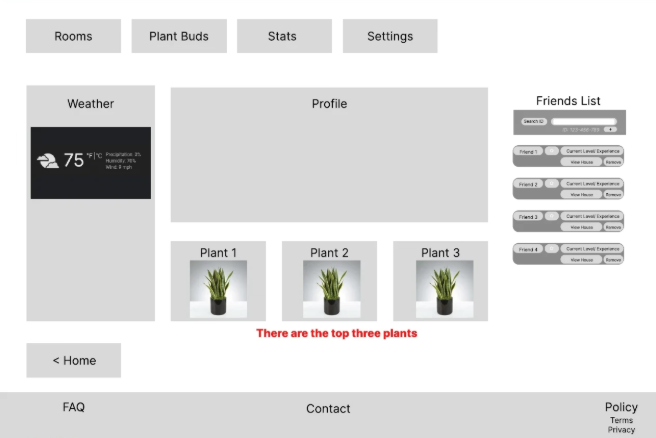
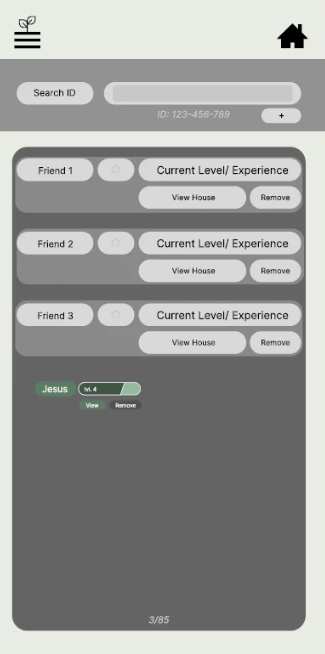
low-fidelity wireframes
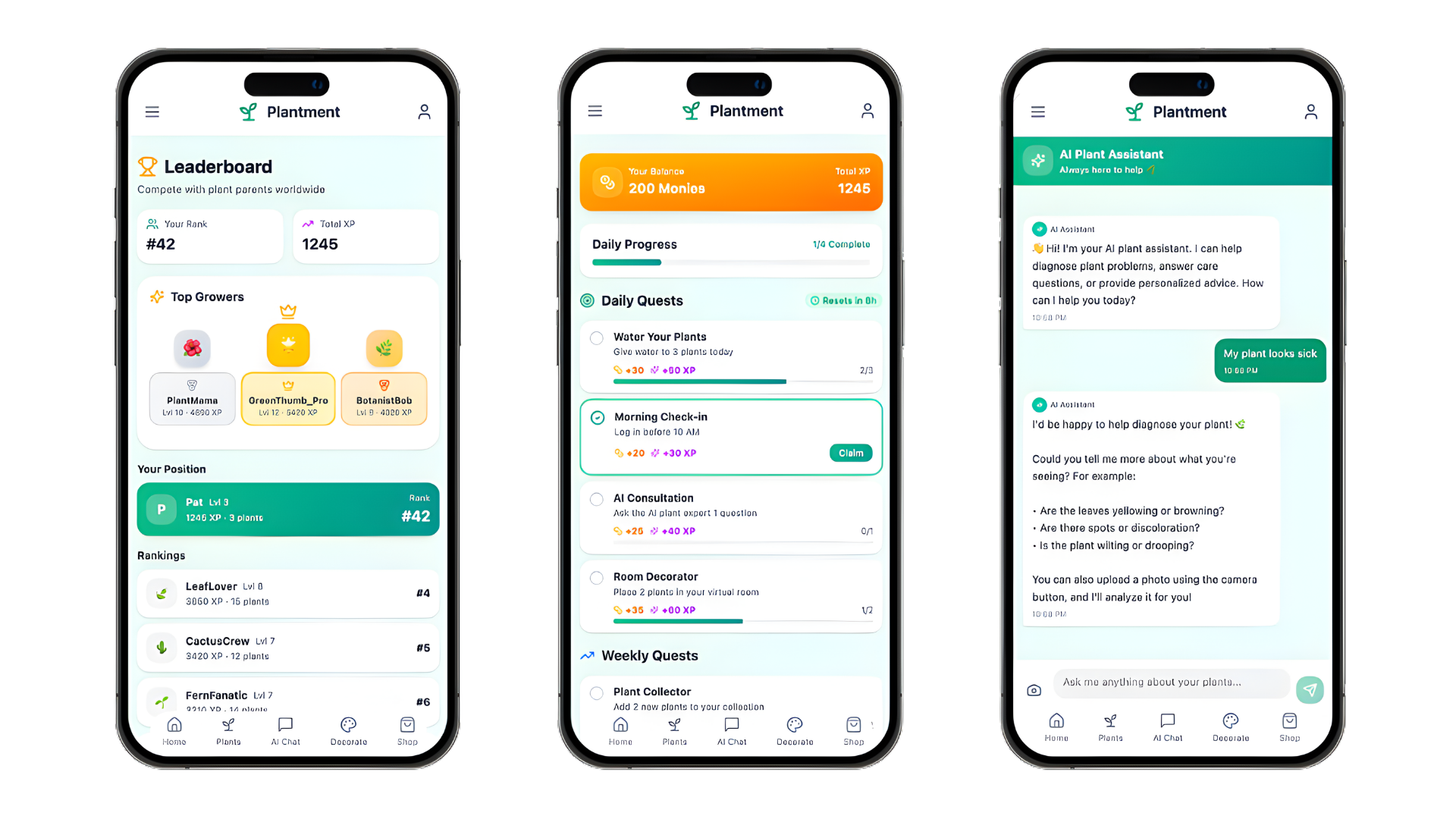
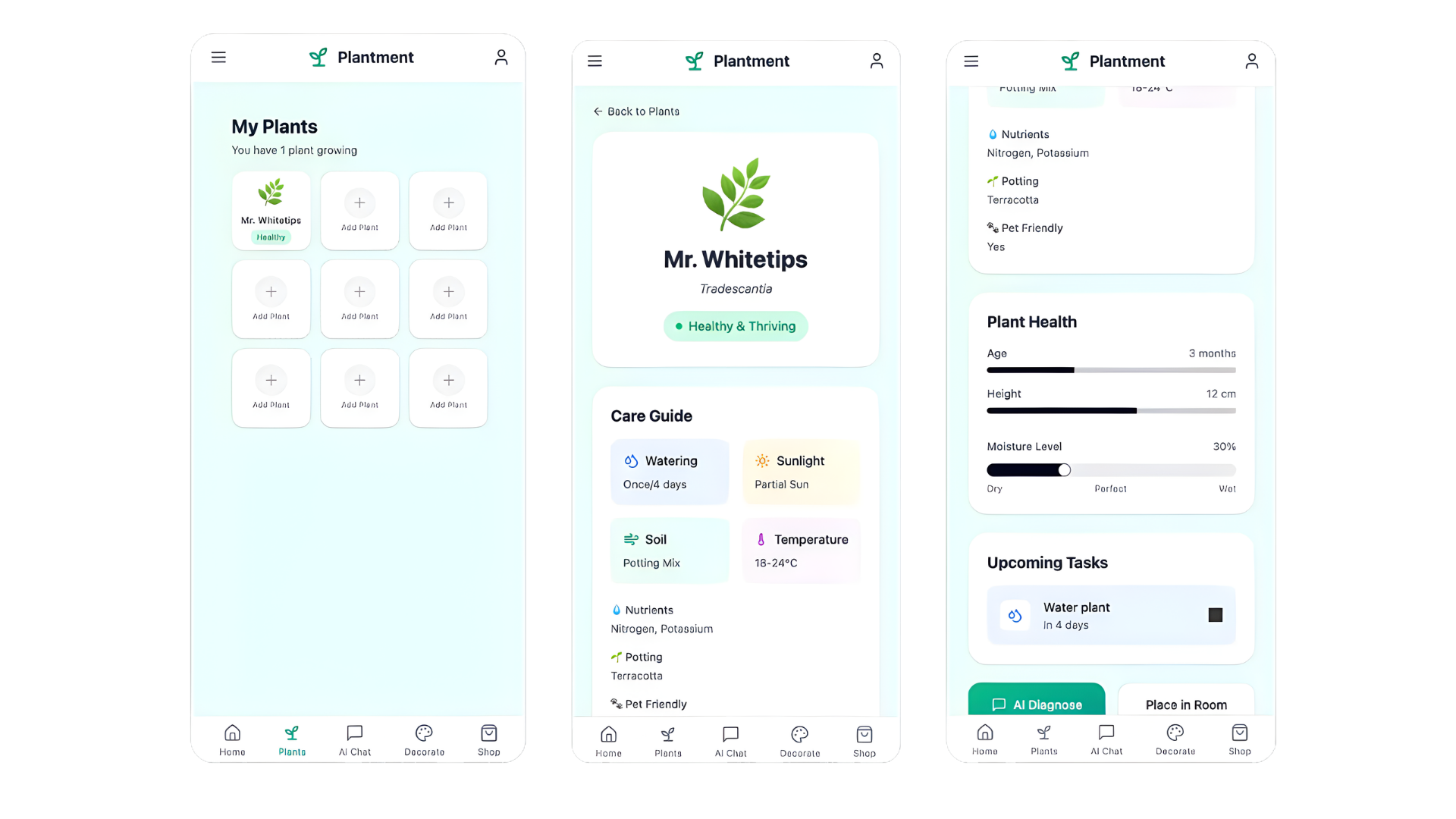
high — fidelity — designs
feature_01 — plant profiles
the garden
the plant profile became the emotional center of the product. each plant gets a dedicated page where users can see watering needs, sunlight status, care tips, and their plant's progress over time.
feature_02 — diagnosis flow
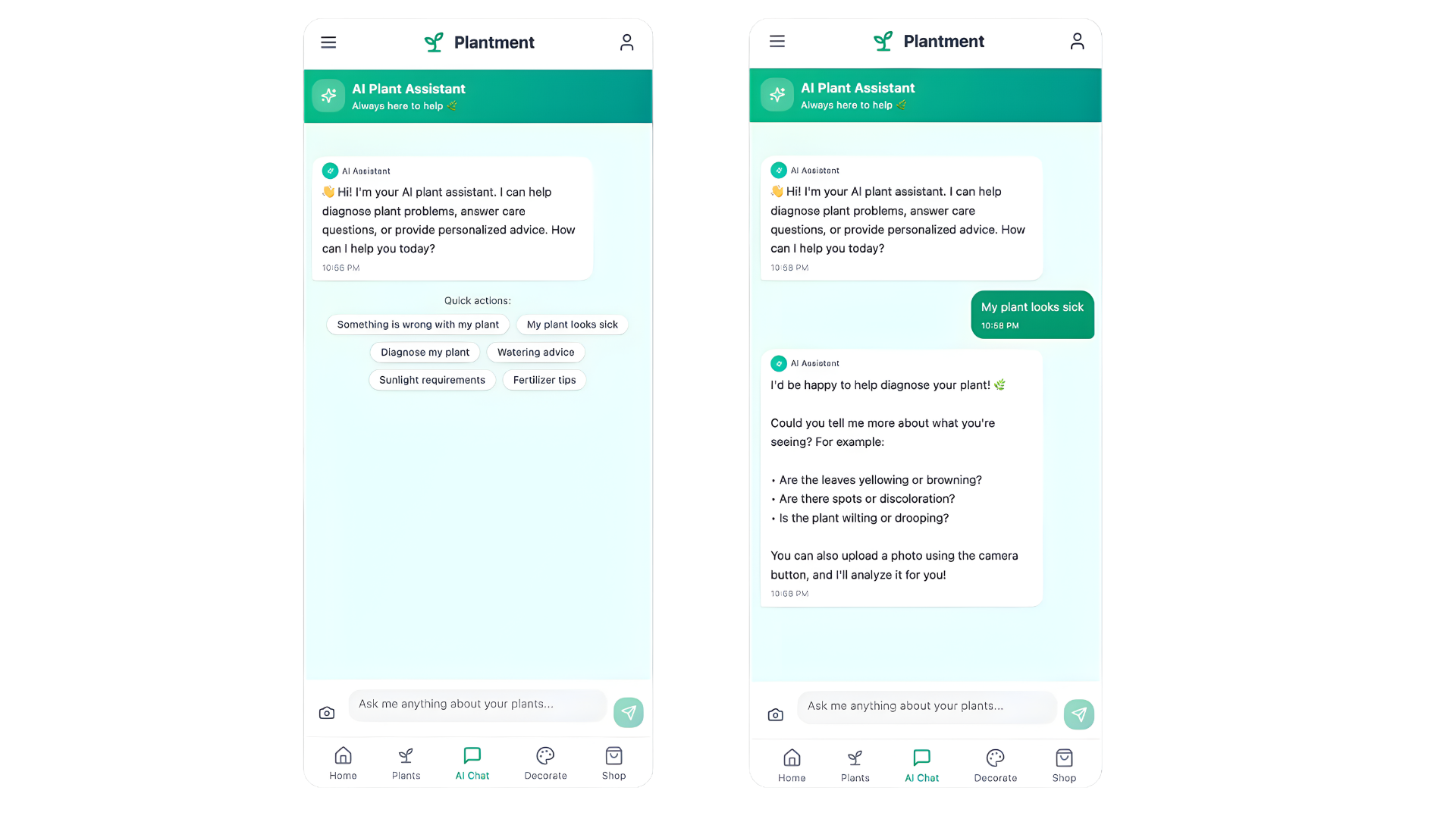
a calm companion, not a chatbot
the ai assistant was designed to feel like a calm companion rather than a technical chatbot. users can ask questions, upload photos, or check symptoms, and the responses appear in simple, friendly language.
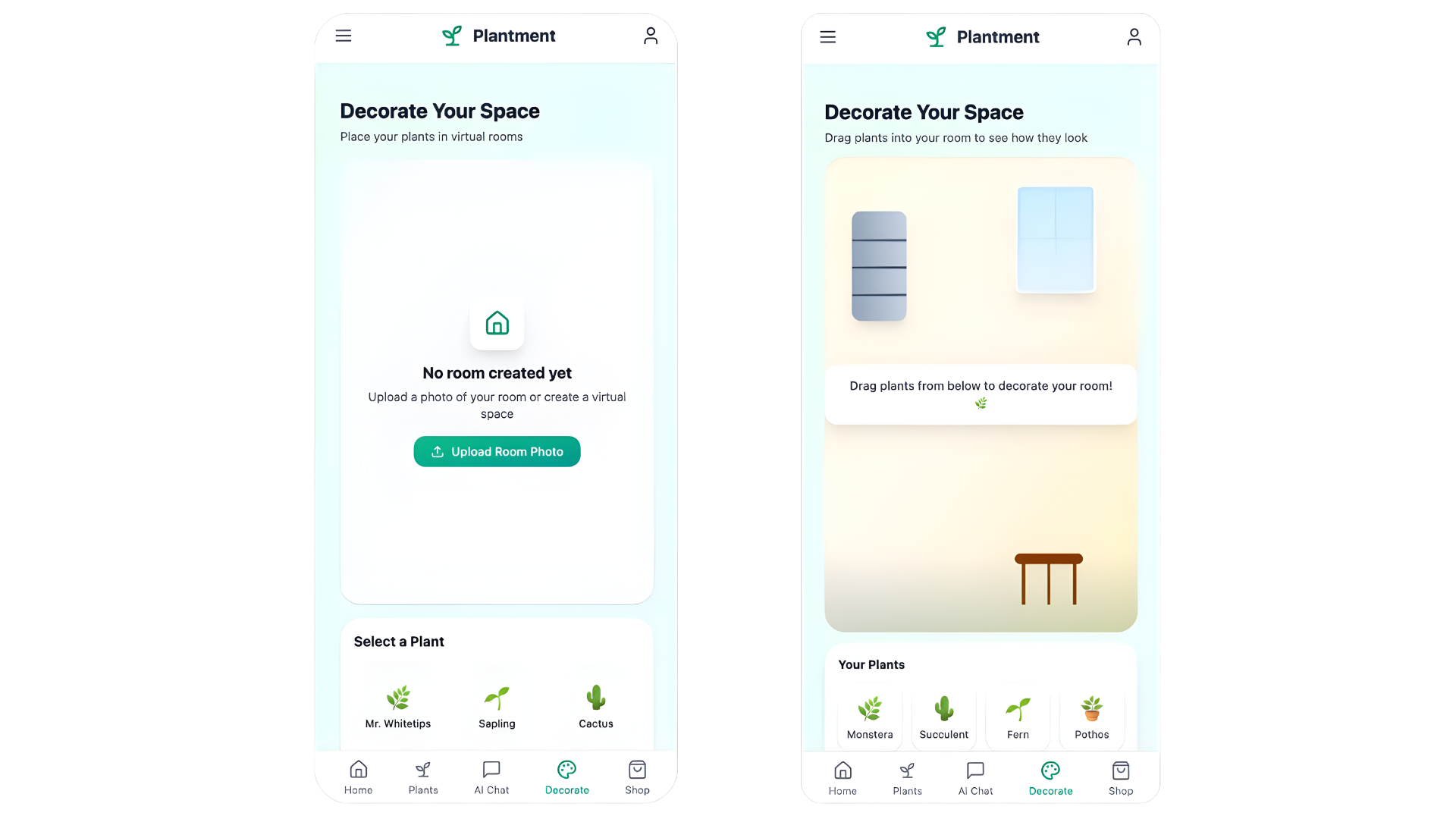
feature_03 — my room
creating a little world
the room builder is where the experience becomes personal.
healthy plants result in happy virtual plants. neglected plants show subtle signs like slight drooping or low energy. this mirror system creates a gentle emotional loop that supports behavior change.
users can place items, rearrange furniture, and customize their world. it becomes a visual reflection of their attention and progress.
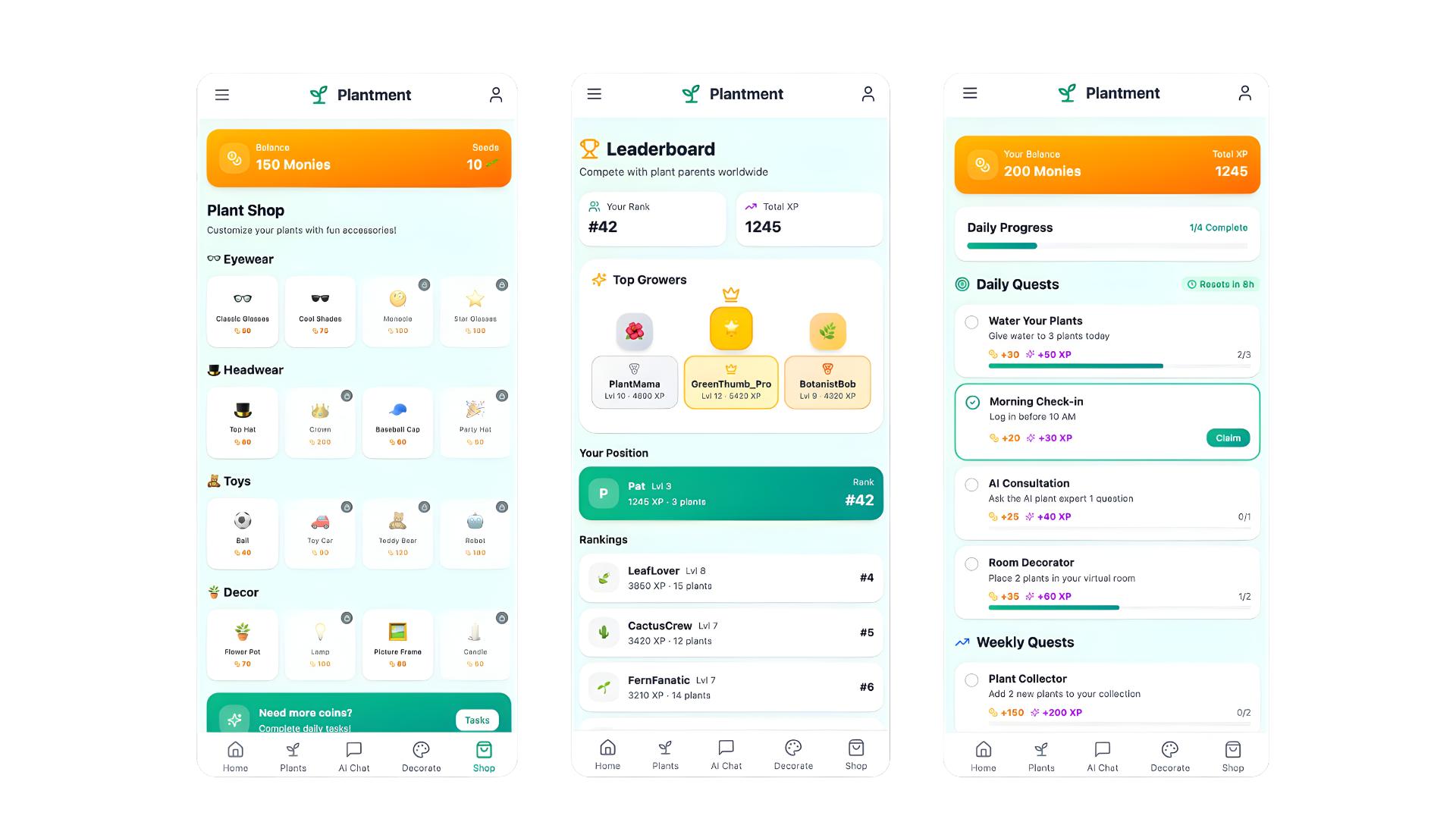
feature_04 — coin economy & rewards
gentle encouragement
the coin system connects real actions like watering plants and completing tasks with in-app motivation.
these coins can be used to unlock items, decorations, and themes in the virtual room. the goal was not to gamify everything, but to add gentle encouragement that keeps users returning to the app without feeling forced.
lvl.07
xp earned
what this project taught us
designer xp0 / 400
#1
simplicity is the hardest part to design
our first instinct was to add more — more features, more information, more options. testing early and often forced us to cut back. the final design was better because of what we removed, not what we added.
#2
small emotional cues can change long-term behavior
the subtle reactions of virtual plants, gentle task animations, and calm ai responses created a positive feedback loop. users reported feeling more connected to their plants after a single session.
#3
motivation grows when progress is visible
visual feedback — a growing plant, a filling health bar, new coins — maintained engagement far better than reminders alone. people came back not because they were told to, but because they wanted to see what changed.
#4
bridging real and virtual strengthens behavior change
the virtual room wasn't just decoration; it became an emotional mirror. when users saw their digital plant drooping, they went and watered their real one. the bridge between digital and physical made care feel consequential.